Section 3: HOW TO DO CUSTOMER DISCOVERY
Customer Discovery is not a one-time task, rather it’s an ongoing cycle of learning that you should continue practicing throughout your startup journey. However, the early and important work tends to follow four simple steps:
- Define your assumptions
- Find people to talk to
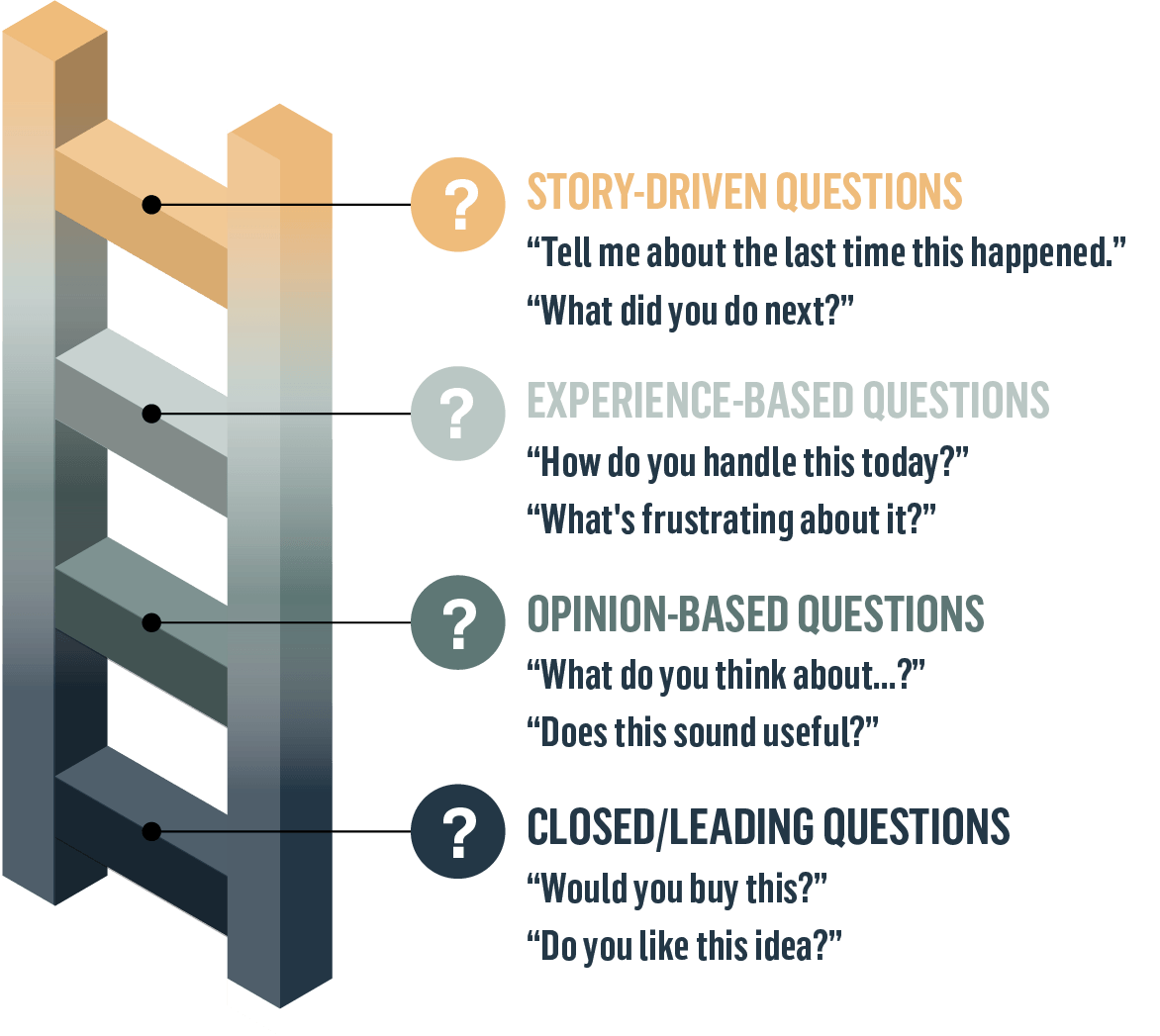
- Ask the right questions
- Capture and analyze what you heard
These aren’t rigid rules. Think of them as anchor points on a journey you’ll revisit many times.
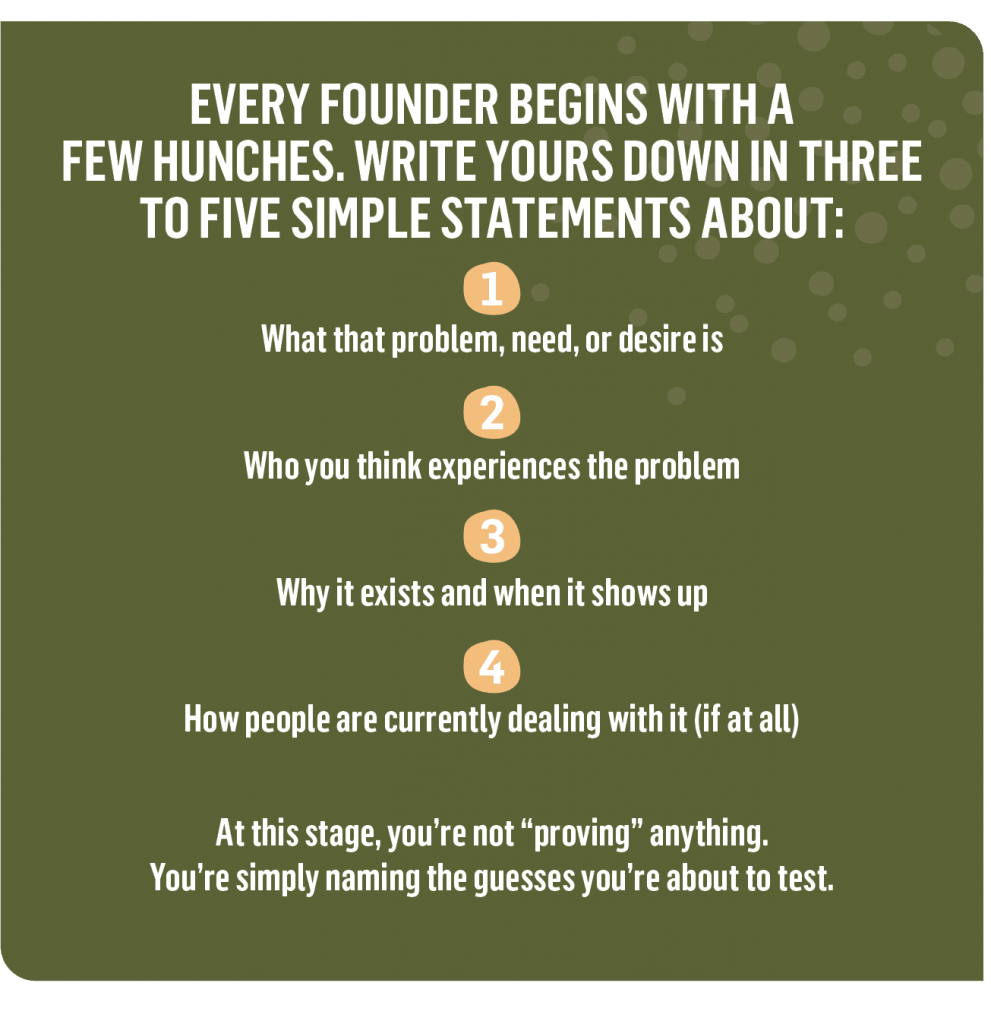
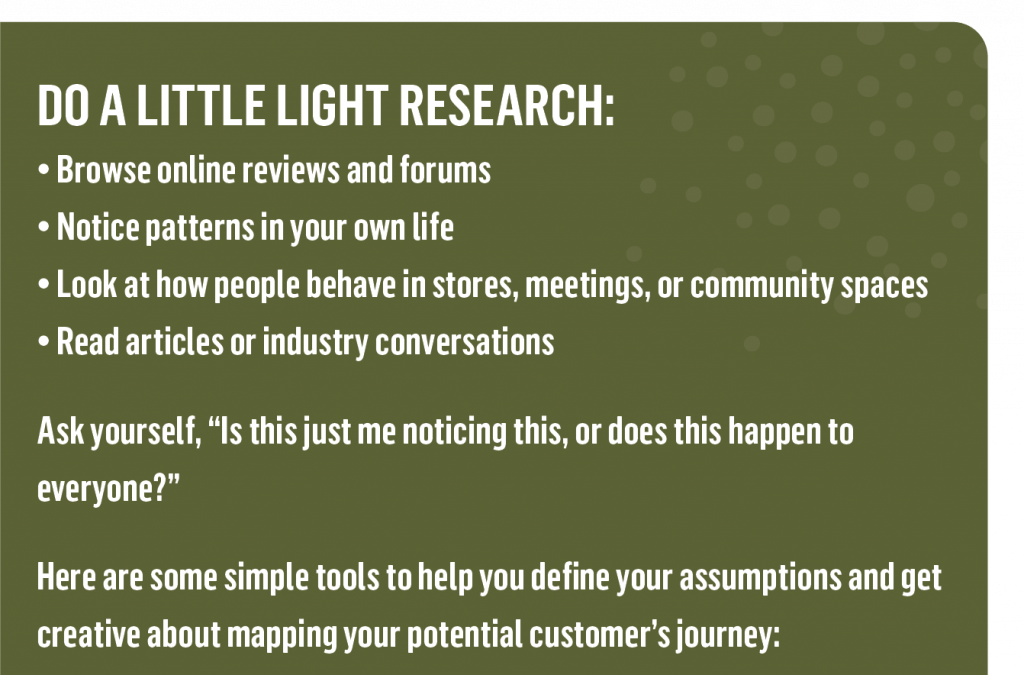


These tools help you organize your early thinking without overbuilding.
The real learning begins when you start talking to actual humans. You don’t need a polished pitch—just say something like:
“I’m exploring a problem related to ___. Can I ask you a few questions about your experience?”
Start with your network. A friend, a coworker, someone you meet at a coffee shop—every conversation helps. But soon, you’ll want to talk to people who actually experience the problem.
In northern Michigan, your next interview participant may be closer than you think:
- 20Fathoms and Grove Community Incubator
- TCNewTech pitch nights
- Office of Possibilities (OOPs)
- Traverse Connect networking events
- Township meetings, farmers markets, meetups, mixers
- B2B conferences or trade events for industry-tailored ideas
Aim to line up your first ten conversations. Don’t overthink it. Start with the people most connected to the problem.
The moment you start hearing the same themes repeated, you’re warming up. You’re getting closer to the heart of the problem



It’s important to develop a set of questions before you go out and start talking to people. And, once you begin interviews, remember: your goal is to learn, not to sell. Skip the pitch. Don’t explain your solution. Just let your interviewees talk about their world.







![Don’t be afraid to use AI in your customer discovery - it can be a fantastic tool! Here is a prompt you can use to help you build out your interview structure…
“I’m doing customer discovery for a startup idea focused on [insert problem, need, or desire].
Please help me create a list of 10 open-ended, non-leading interview questions to understand:
– how people currently experience this problem,
– what workarounds they use,
– how serious the problem is, and
– what an ideal solution would look like.
Also, review my questions to identify and reword any that might be leading or closed-ended.”
This makes it easy for a founder to get started quickly.](https://michiganscreativecoast.com/wp-content/uploads/2026/09/SEC3_AI_Robot-838x1024.png)
It’s important to capture and write everything down so you’re not relying on memory. You can use a simple spreadsheet, Airtable, Google Doc, Miro board, anything works.
What matters is finding a way to capture and identify the patterns you are looking for:
- Repeated frustrations
- Emotional reactions
- Clear action to take
- Workarounds you didn’t expect
- Any moment when someone says, “I’d pay for that right now”
The goal is not to validate your idea—it’s to discover what’s actually true.
WHEN HAS CUSTOMER DISCOVERY “ENDED”?
The short answer: it never fully ends. Successful founders keep talking to customers as long as their business exists.
But there is a point early on where your learning stabilizes. You’ll know you’re there when:
- Conversations start to sound repetitive
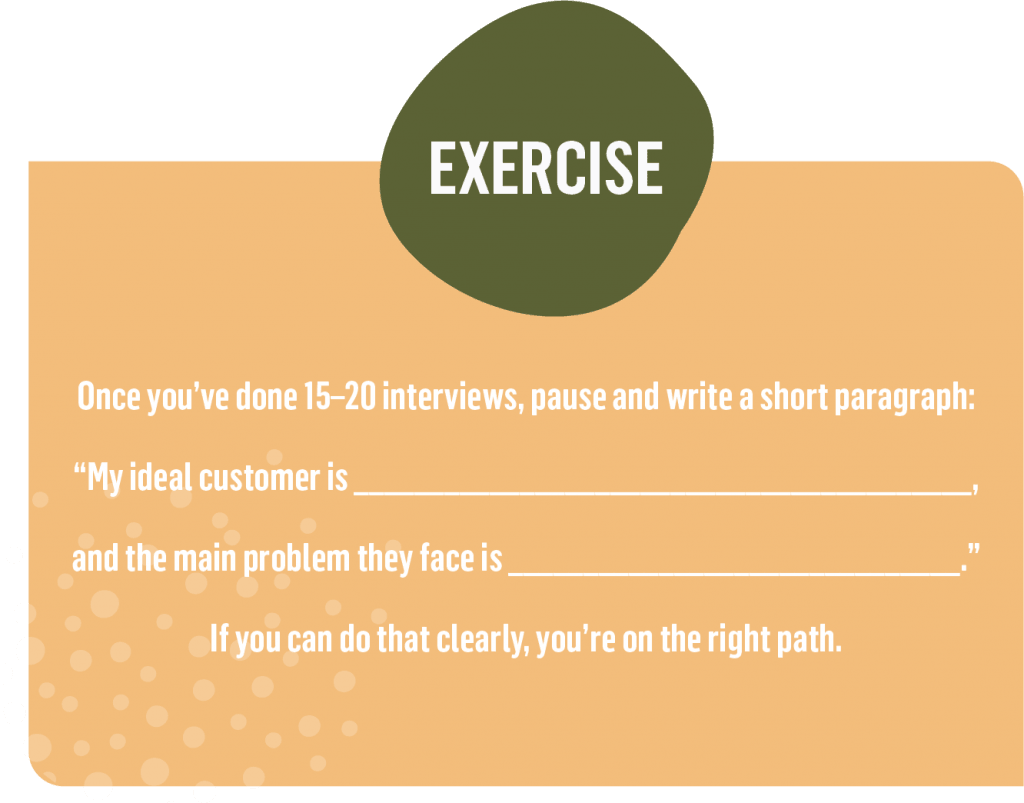
- You can describe your ideal customer in a sentence
- You understand the problem well enough to imagine a solution
- You have a sense of whether someone might actually pay for that solution
Once you have this level of clarity, you’re ready for the next step: Idea Validation.